by Brock | Mar 28, 2015 | Annuals, Compost, Plant Care, Shade Gardening
 |
CONTAINERS
- Size-Containers should be large enough to give plants plenty of root space for healthy growth. The larger the pot size, the better the success.
- Drainage Holes-All containers should have sufficient drainage holes in the bottom. This prevents overwatering and help provide air circulation necessary for healthy plant growth.
- Type
- Plastic
- Terra Cotta
- Ceramic/Glazed
- Galvanized
- Wire (coco or moss lined)

|
 |
SOIL vs GARDEN DIRT
Commercially prepared potting soil is recommended in garden containers. Potting soil contains rich organic material such as peat and composted barks needed for optimal plant growth & flowering. It also contains vermiculite, which helps the soil drain; yet keeps it moist, resulting in healthy roots. Healthy Roots = Healthy Plants!
Dirt from the garden should never be used in containers. It contains bacteria, noxious seeds, and other harmful organisms that can effect your newly potted plants. Garden dirt also becomes compacted in containers, resulting in rotting roots, stunted growth and eventually plant death. |
 |
LOCATION
Before selecting the plants for your containers, consider how they will be used & where they will be placed.
- Will they be in full/part sun or full/part shade?
- Will they be exposed to wind or radiant heat?
- Will they be placed on the porch, patio or deck?
- Are there any that will be grouped together or in a hanging basket or window box?
- Will they be used for growing herbs or vegetables?
All of these factors need to be considered to when choosing the right plants to fill your pots. Planning ahead results in successful container gardening!
|
 |
PLANTS
Next comes the fun part! Picking out plants can be a little overwhelming at first because there are so many to choose from, but if you consider a few things first, you will be successful.
- Light and water requirements
- Plant growth habit-trailers, fillers, uprights
- Plant size/height
- Flower size/shape
- Flower/foliage color
You can create a unified collection of potted plants by planning a themed garden. Use your imagination and you’ll be surprised with the fun & unique designs you may come up with.
Group flowers by color or create a tiered look by combining plants that are upright, round or trailing. Keep the tallest plants towards the back or center to create a focal point. Trailing plants should be placed towards the edge to naturally cascade. The round plants should be used to fill in the space between the trailers and uprights. Don’t forget about plants known for their sweet scents or bold foliage.
Another idea is to grow an edible garden. Consider creating a fresh salsa garden by planting tomatoes & peppers in a large pot surrounded by smaller pots of cilantro & chives. Herb gardens are also very popular. Place these close to the back step for easy harvest. |
 |
PLANT CARE
- Fertilizer– Adding a granular, slow release fertilizer, such as Osmocote, at the time of planting will feed your plants for 4 months.
- Water Requirements– Check the water daily. Some plants exposed to high heat & wind might need to be watered more than once a day! Water thoroughly until the excess water runs out the bottom of the pot.
- Trimming/Deadheading-Some plants are aggressive growers and perform better by removing the spent blossoms or with a regular ‘haircut’.
|
by Brock | Jan 13, 2015 | Landscaping, Ornamental Grasses, Perennials for Shade, Shade Gardening, The Birds & The Bees
We’ve compiled a list of the our best-selling, most reliable perennials for Central Nebraska. We have carried these varieties of perennials for several years and have eventually compiled this list based on the performance of these perennials. These varieties will give you the most color, most flowers, have the least amount of maintenance, and are the most hardy. Make sure you find room in your landscape for these tremendous perennials!

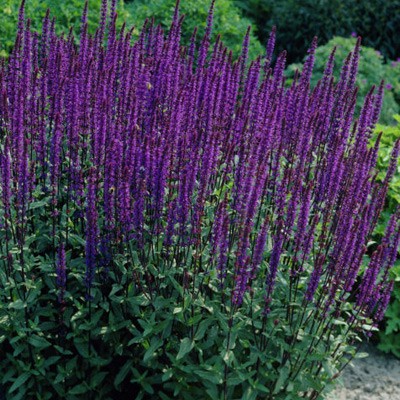
Salvia ‘May Night’
A neat, clump-forming plant w/stunning deep purple flower spikes May-August. Plant in full sun, mid-border along with ’David’ phlox and ‘Stella de Oro’ daylily. ‘May Night’ continues to be one of the most stunning plants in the perennial border. Grows 22-28” tall.

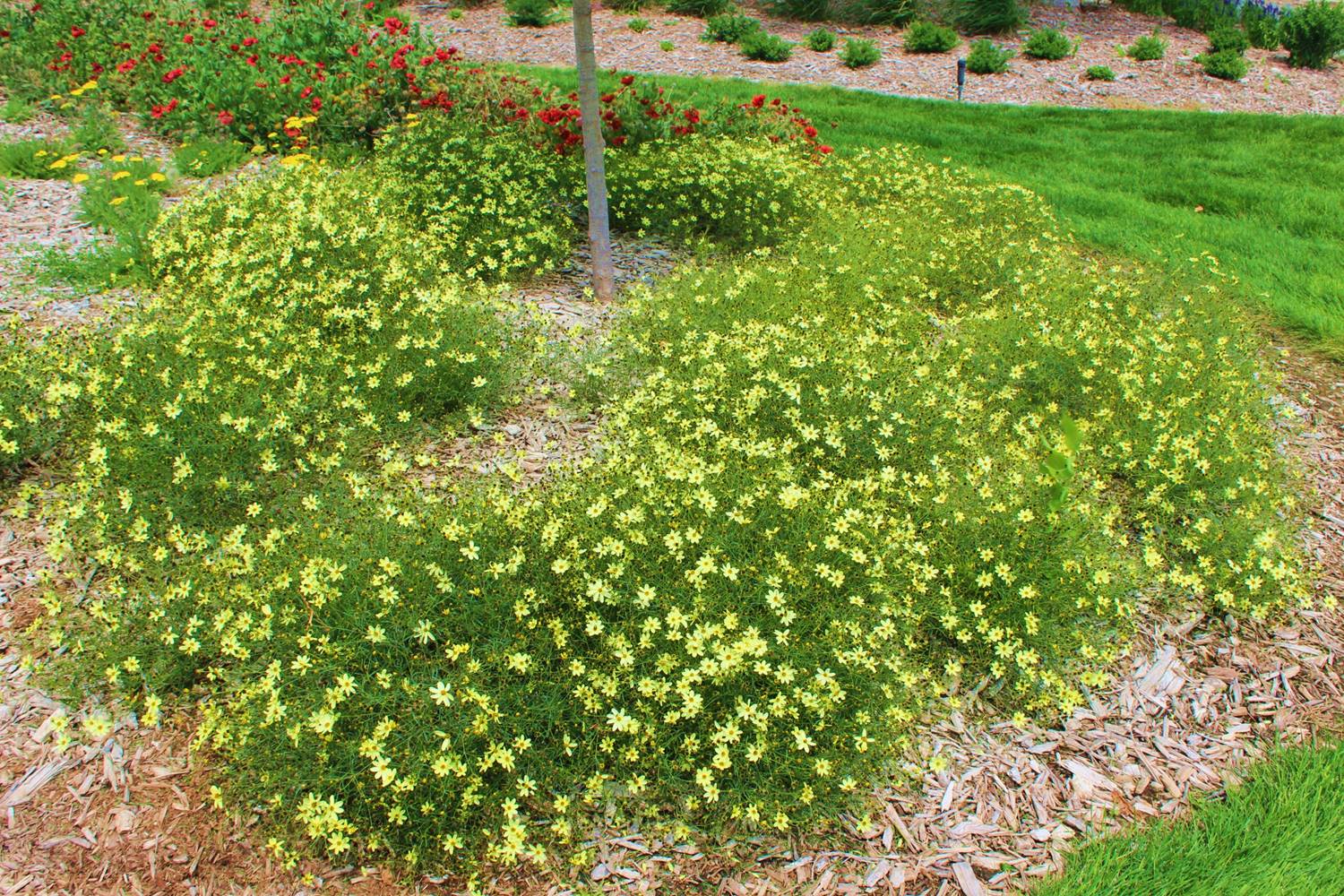
Coreopsis ‘Moonbeam’
This cheery plant seems to never stop blooming. It’s bright yellow, star-shaped flowers and lacy foliage compliment every other plant in the sunny border. ‘Moonbeam’ continues to be one of our best selling perennials. Grows 18” tall.

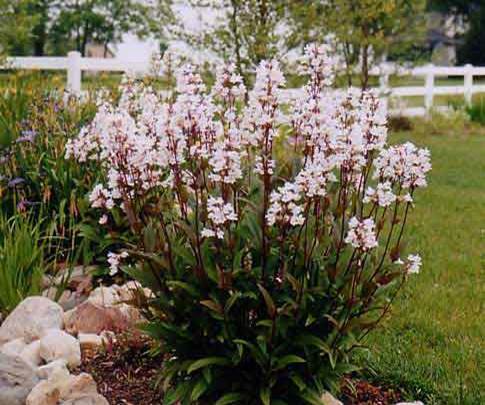
Penstemon ‘Husker Red’
This ‘Great Plant for the Great Plains’ is a University of NE introduction. ‘Husker Red’ has delicate white flowers that dance above striking, deep-red foliage. This early bloomer pairs nicely with almost anything in a sunny border. Grows 20-24” tall.

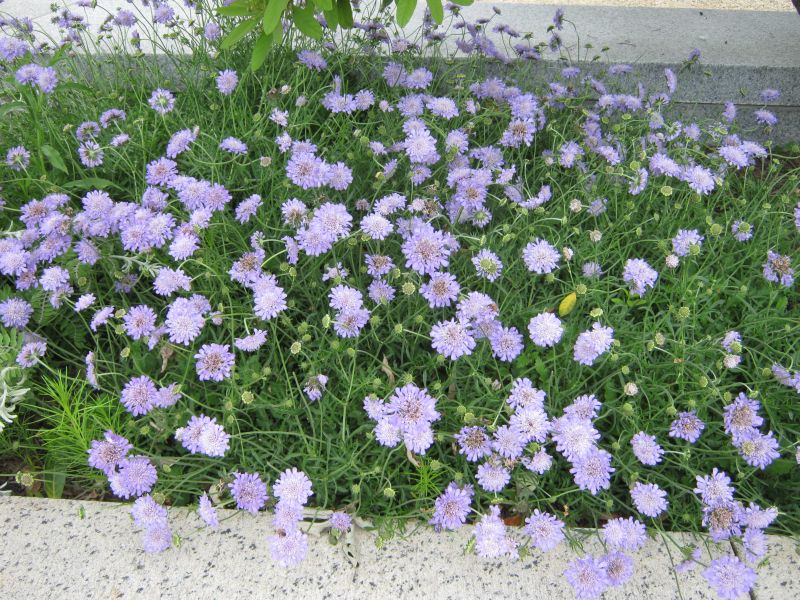
Scabiosa ‘Butterfly Blue’
This charming plant blooms forever. It’s ‘pincushion-like’ flowers attract butterflies and are excellent for cutting or drying. Plant in the front of the perennial border along with ‘Moonbeam’ coreopsis in full sun and well drained soil. Grows 18” tall.

Sedum ‘Autumn Joy’
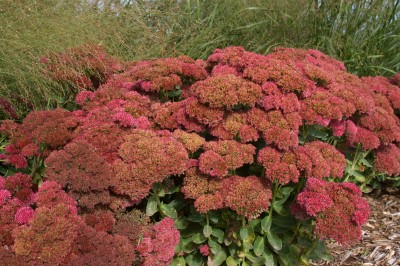
No perennial garden should be w/out ‘Autumn Joy’. This hardy, easy-to-grow plant gives a long season of interest. Blue-green foliage support massive rosy-pink late summer flowers, darkening to coppery-red in the fall. Exceptional color combination when planted alongside ‘Russian Sage’ & ‘Goldsturm’ Rudbeckia. Blooms in full sun. Grows 24” tall.

Rudbeckia ‘Goldsturm’
This prairie wildflower sometimes get a bad rap. But ‘Goldsturm’ isn’t your common ‘Black-eyed Susan’. This superior variety displays magnificent deep-yellow flowers over sturdy dark green foliage. Looks striking next to ornamental grasses and ‘Russian Sage’. Blooms mid-summer through fall. Grows 24” tall.

Perovskia ‘Russian Sage’
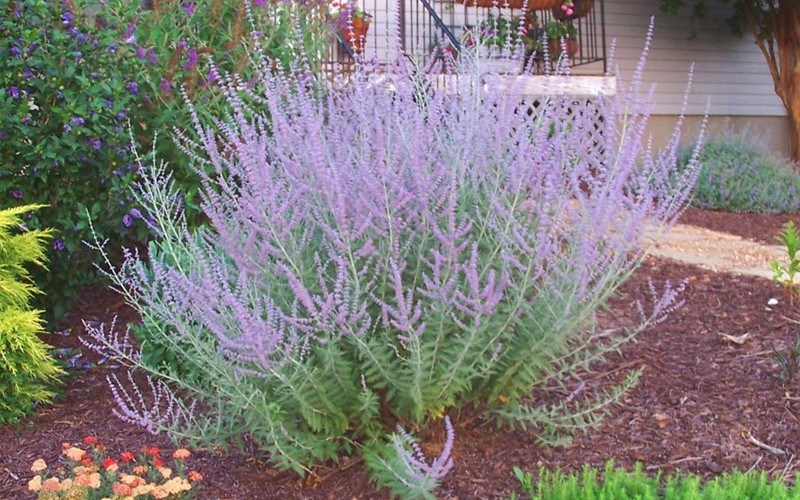
This shrub-like perennial displays delightful sprays of lavender-blue flowers above silvery foliage. It thrives in full sun and hot weather. Use in the back of the border to create height and contrast. Combines nicely w/ornamental grasses.

Phlox ‘David’
This summer blooming garden phlox has deliciously fragrant, white flowers above tall, mildew resistant foliage. Plant in the back of the flower border along side coneflowers and delphiniums. Blooms July-Aug. Grows 36-40” tall.

Heuchera ‘Palace Purple’
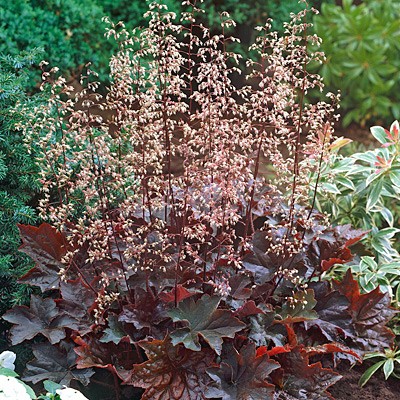
An eye catching plant w/mounds of bold, deep purple foliage and airy clusters of white flowers resembling bells. Offers color spring-fall in the front of a semi-shade flower border. Mixes nicely w/ blue hostas. Grows 12-14” tall.

Echinacea Magnus ‘Purple Coneflower’
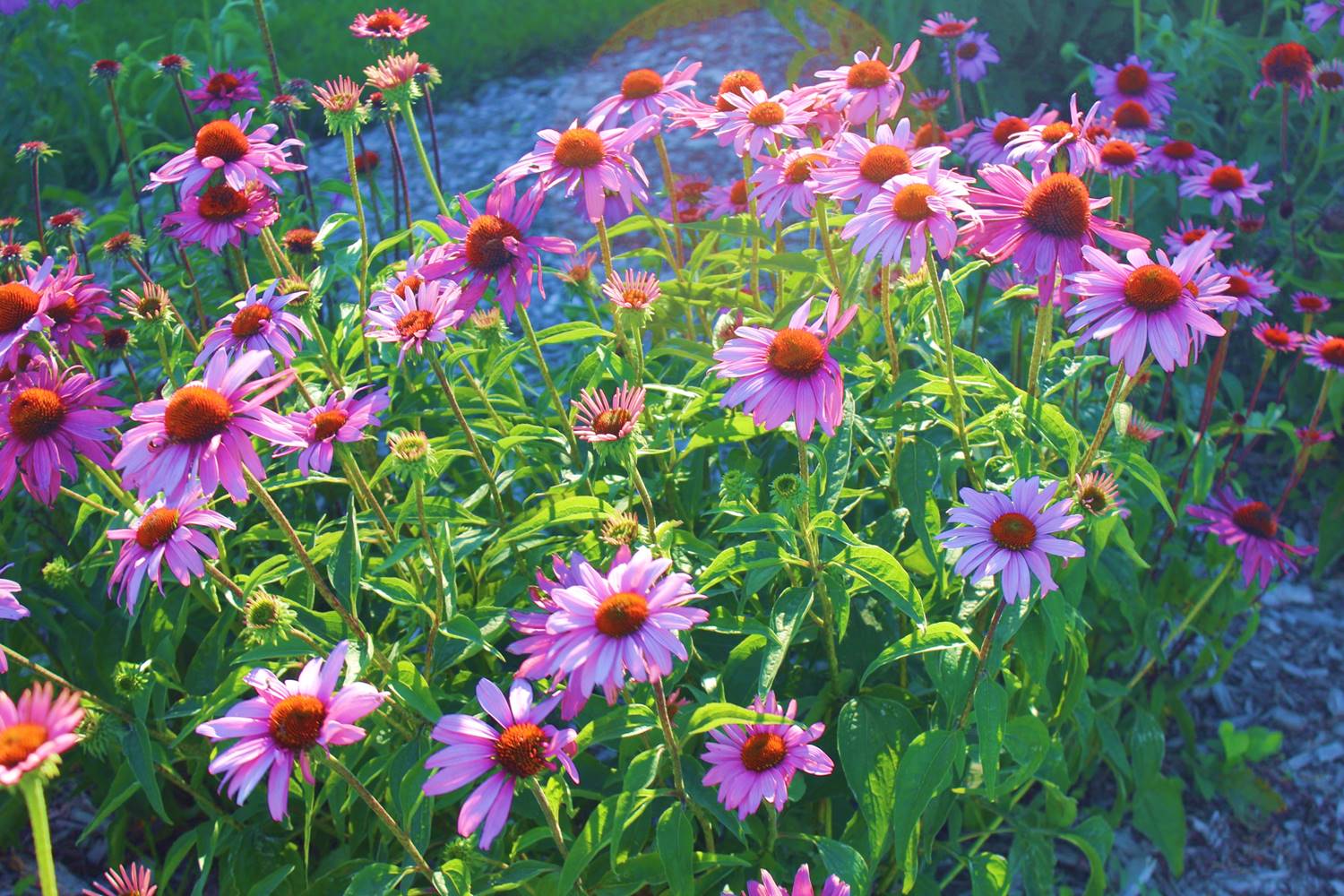
This prairie wildflower continues to be in high demand. Dark Purple, daisy-like flowers stretch horizontally surrounding an intense, copper colored seed head. Birds and butterflies alike love this very adaptable plant. Blooms all summer into early fall. Plant in full sun towards to back of the border. Combines nicely w/ ’Russian Sage’. Grows 36” tall.
Other Top Ranks of Garden Perennials
Daylilies
Most dependable of all perennials! There’s no end in sight to the number of varieties available (over 40,000). They come in a rainbow of colors, heights and bloom times, extending the flower season from May-Aug. They’re disease-free and can be grown anywhere. Try them planted in masses, in combination w/ other perennials or even in containers!
Hostas
First class shade plants that are ever-increasing in demand. Hostas are now the # 1 selling perennial. Gardeners have a passion for these collectors items w/ over a 1,000 varieties to choose from. All very adaptable to our Nebraska landscapes adding foliage color and texture.
Ornamental Grasses
These gems of the garden are becoming increasingly popular and essential elements in landscape design. They’re easy to grow and add movement and texture unlike and other plant. Ornamental Grasses make spectacular, eye-catching garden features.
by Brock | Feb 25, 2013 | Perennials for Shade, Shade Gardening, Shrubs, Trees
Landscaping Information: A Garden for all Seasons
Basics:
- Start with a realistically sized area. Small or large, just be aware of your space.
- Is your area sunny or shady? What part of the day does it get the most of either condition?
- What is the soil type? How well does the soil drain? Is it moist? Dry?
- Consider all of these carefully for each plant you choose, as well as the following:
- size
- bloom type
- flower color
- foliage color
Planning:
- Plant Size
- Short plants are best for borders.
- Tall spiky plants add accent to foreground amid short plants.
- Contrasting heights throughout the design make your area more interesting.
- Color & Texture
- Mix & match! Take note of foliage color as well as bloom color!
- Foliage texture is essential for diversity. Contrast fine & feathery with bold & glossy.
- Foliage will also maintain interest when blooms are sparse.
- Space Relations
- Mass plant! This makes a bold statement.
- Single plantings are best suited for a focal point. (Climbing vines on arbors/trellises, ornamental trees, blooming shrubs.)
- Incorporate herbs, annuals, shrubs, statuary, rocks, bird baths, arbors, and trellises
Confidence
- Fear not! Perennial gardening is a trial & error hobby where error is OK!
- So try & err! If you don’t like it, change it. This will ensure trial & SUCCESS!
- Share & share alike. Perennials can be divided every few years. Give them as gifts from the heart to fellow gardeners.
- Treat yourself & your soul. Try a new perennial each year. Watching it grow will undoubtedly refresh your quality of life.
- Remember: Patience is a virtue!