by Brock | Jan 16, 2015 | Compost, Landscaping, Lawn Care, Plant Care, Trees, Waterwise Gardening
Maintaining your landscape need not be a chore. By giving proper care to your plants, they will not simply survive…they will thrive! Use this guide to help individual plants grow into your own personalized, spectacular landscape.
Drink Up!
Though watering needs vary according to plant varieties, soil types and weather, there are general certainties to keep in mind.
Most importantly, observe your plants! Dig down about 6 inches just outside the root zone. If the soil crumbles when you squeeze it, it’s time to water. If the soil forms a ball, wait a few days.
When you water, soak the ground thoroughly enough to saturate the root zone. Allow adequate time between waterings for proper drainage.
Watering properly is essential the first growing season. Following years allow for less watering, but always check the soil and look at the plants! |
Boost with Fertilizer
Bonide Plant Starter is a sufficient fertilizer at planting time. For any other fertilizing, use an all-purpose fertilizer, such as Miracle Gro or Osmocote.
General fertilizing is not recommended after August 15th. Fertilizing promotes leaf production. As winter approaches, the plant needs its energy for root production instead.
Less is more! Never give your plant more than the recommended dosage. You will burn your plant. Always follow label instructions on fertilizers. |
Mulching
Important for water retention, maintenance of soil temperature, and reduction of weeds, mulching also makes the planted area aesthetically pleasing.
Use shredded cottonwood or hardwood mulch around all newly planted trees and shrubs.
Mulch should be layered 3”-4” thick, and extended to a 3’ radius.
Always leave 3” or 4” between the base or trunk of the plant and the mulch. This allows for air circulation. |
Seasonal Watering
Hot summer days are not the only times plants thirst. When there is little snow or rain throughout autumn, winter, and spring, roots will easily dry out. Since soil expands and contracts (called “heaving”) air pockets can form around roots. During days of constant freezing temperatures, roots are apt to freeze too! Water prevents air pockets from forming, thus insulating the roots. |
Pruning & TrimmingConsidered by many to be an art, important for aesthetic beauty and shape, pruning trees and shrubs is actually essential to the overall health and proper growth of plants.A few tips:
- Wait 2-3 years before shaping your tree.
- New plants do not require pruning, and usually establish quicker if left untrimmed.
- Pruning stimulates growth. Old plants, or those which have become woody or “leggy” may need to be trimmed back drastically (no more than 25% of the shrub). This will give the plant a fresh start.
- However, not all plants can afford to be pruned heavily. Whether you take out a few out-of-place branches, or give the plant a hair-cut depends on its variety.
- Remove the D’s…that is, all dead, damaged, and diseased branches. Also, trim out any crossing branches. Use a sharp pruner to avoid further damage.
- Most shrubs can be trimmed in March or April after the year it was planted. Those flowering in spring, however, such as lilac and forsythia, must be trimmed after flowering is over in early summer. Consult Steinbrink’s for your trimming needs.
|
Healthy Soil, Healthy PlantsThe most fundamental element in the garden is soil. Few gardens or planting areas have naturally perfect soil. Fortunately, there is help.
- EKO Compost is rich in nutrients and microorganisms. Add it to flower beds before planting, or mix it with back fill soil when planting trees and shrubs.
- Vermiculite and Perlite are lightweight soil conditioners that improve soil aeration, drainage, and moisture retention in soil. Ideal for container planting, these amendments can also be used in small planting beds.
- Clay soil, a common problem for many gardeners, can be conditioned with EKO Compost. It improves soil structure and aids air and water penetration.
|
Adding to Your LandscapeSpring is a nice time to do some “remodeling” in the yard. So is summer. So is autumn. Container-grown plants can be planted anytime during the growing season…from the last frost of winter (usually April) until the ground freezes hard in late autumn (October or November).
- Heed this precaution for summer planting: Water generously! Check the soil and look at the plant daily, even twice per day, to make sure it has not gone into transplant shock.
- Steinbrink’s carries plants all season long! Don’t wait to plant. The sooner it is in the ground, the quicker the plant will become an established asset to your garden or landscape.
|
| Give us a buzz!Gardening can be both exciting and overwhelming. If you ever have questions or need advice about your plants, call us! We can help!(308) 234-6670 |
On the Straight & NarrowContrary to popular belief, staking is not always necessary for newly planted trees.
- Stake trees that are subjected to extremely high winds.
- Make sure the supports are not rubbing the bark.
- Keep the tree staked for one growing season only unless otherwise directed by a Steinbrink’s specialist.
|
by Brock | Jan 13, 2015 | Landscaping, Ornamental Grasses, Perennials for Shade, Shade Gardening, The Birds & The Bees
We’ve compiled a list of the our best-selling, most reliable perennials for Central Nebraska. We have carried these varieties of perennials for several years and have eventually compiled this list based on the performance of these perennials. These varieties will give you the most color, most flowers, have the least amount of maintenance, and are the most hardy. Make sure you find room in your landscape for these tremendous perennials!

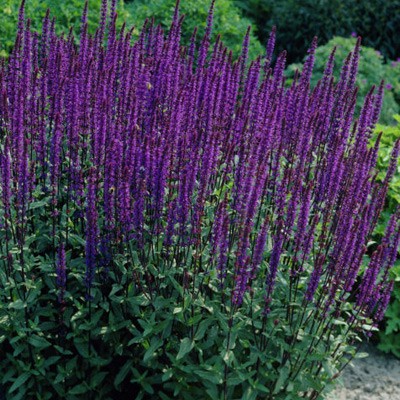
Salvia ‘May Night’
A neat, clump-forming plant w/stunning deep purple flower spikes May-August. Plant in full sun, mid-border along with ’David’ phlox and ‘Stella de Oro’ daylily. ‘May Night’ continues to be one of the most stunning plants in the perennial border. Grows 22-28” tall.

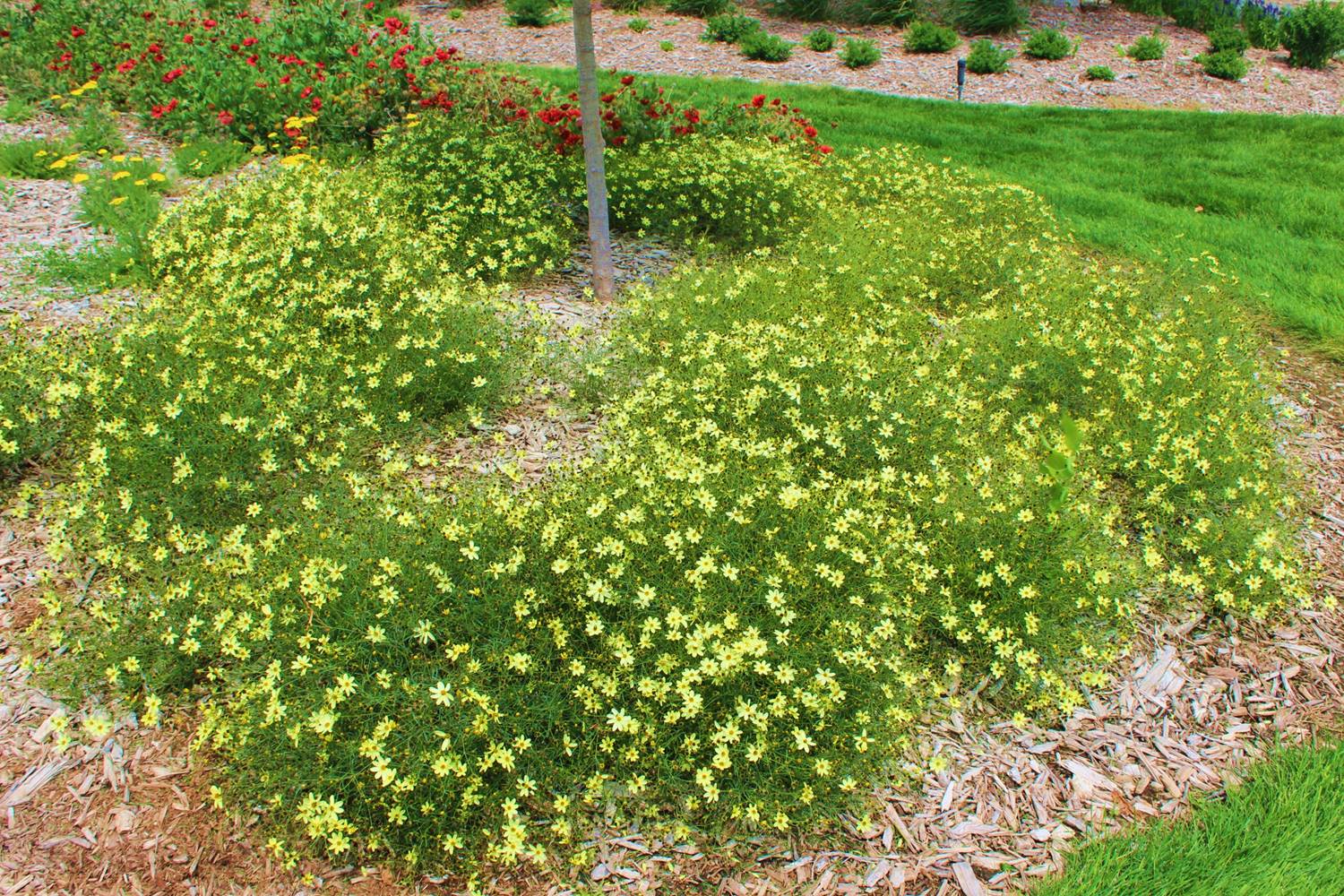
Coreopsis ‘Moonbeam’
This cheery plant seems to never stop blooming. It’s bright yellow, star-shaped flowers and lacy foliage compliment every other plant in the sunny border. ‘Moonbeam’ continues to be one of our best selling perennials. Grows 18” tall.

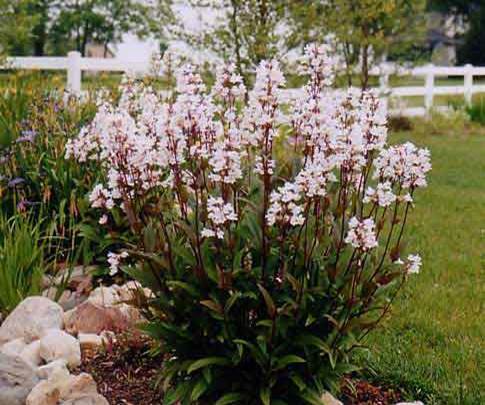
Penstemon ‘Husker Red’
This ‘Great Plant for the Great Plains’ is a University of NE introduction. ‘Husker Red’ has delicate white flowers that dance above striking, deep-red foliage. This early bloomer pairs nicely with almost anything in a sunny border. Grows 20-24” tall.

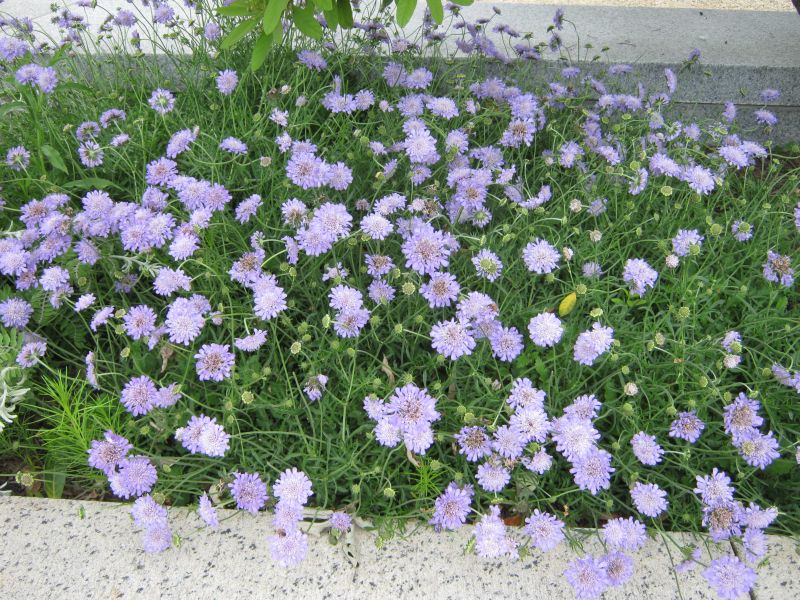
Scabiosa ‘Butterfly Blue’
This charming plant blooms forever. It’s ‘pincushion-like’ flowers attract butterflies and are excellent for cutting or drying. Plant in the front of the perennial border along with ‘Moonbeam’ coreopsis in full sun and well drained soil. Grows 18” tall.

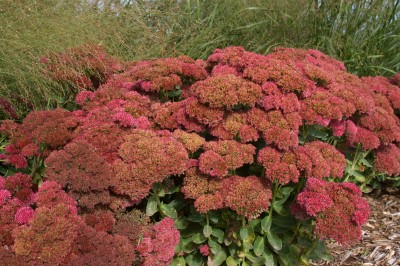
Sedum ‘Autumn Joy’
No perennial garden should be w/out ‘Autumn Joy’. This hardy, easy-to-grow plant gives a long season of interest. Blue-green foliage support massive rosy-pink late summer flowers, darkening to coppery-red in the fall. Exceptional color combination when planted alongside ‘Russian Sage’ & ‘Goldsturm’ Rudbeckia. Blooms in full sun. Grows 24” tall.

Rudbeckia ‘Goldsturm’
This prairie wildflower sometimes get a bad rap. But ‘Goldsturm’ isn’t your common ‘Black-eyed Susan’. This superior variety displays magnificent deep-yellow flowers over sturdy dark green foliage. Looks striking next to ornamental grasses and ‘Russian Sage’. Blooms mid-summer through fall. Grows 24” tall.

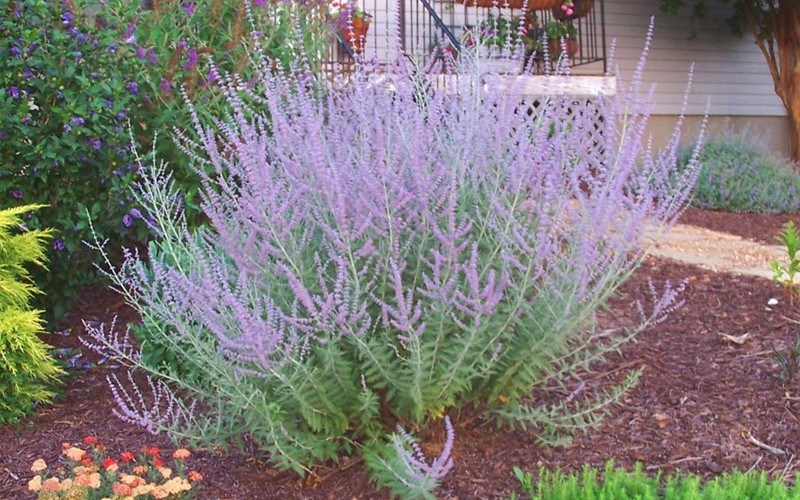
Perovskia ‘Russian Sage’
This shrub-like perennial displays delightful sprays of lavender-blue flowers above silvery foliage. It thrives in full sun and hot weather. Use in the back of the border to create height and contrast. Combines nicely w/ornamental grasses.

Phlox ‘David’
This summer blooming garden phlox has deliciously fragrant, white flowers above tall, mildew resistant foliage. Plant in the back of the flower border along side coneflowers and delphiniums. Blooms July-Aug. Grows 36-40” tall.

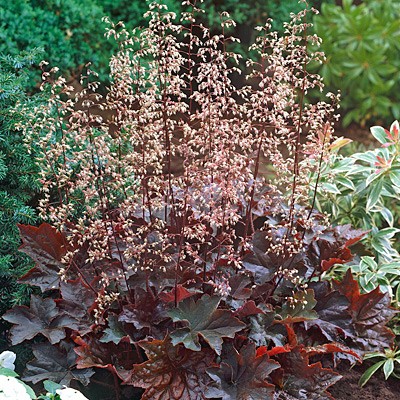
Heuchera ‘Palace Purple’
An eye catching plant w/mounds of bold, deep purple foliage and airy clusters of white flowers resembling bells. Offers color spring-fall in the front of a semi-shade flower border. Mixes nicely w/ blue hostas. Grows 12-14” tall.

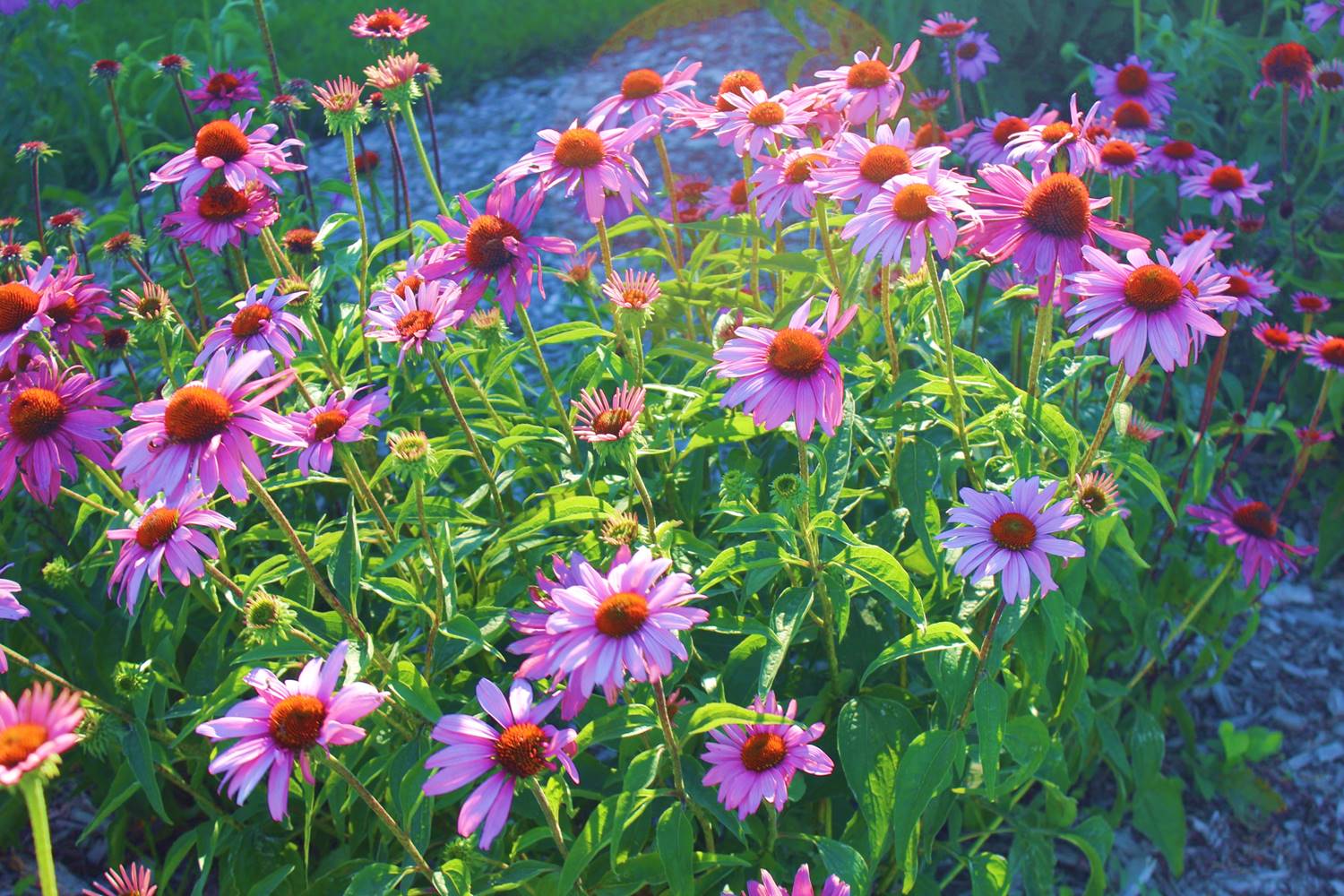
Echinacea Magnus ‘Purple Coneflower’
This prairie wildflower continues to be in high demand. Dark Purple, daisy-like flowers stretch horizontally surrounding an intense, copper colored seed head. Birds and butterflies alike love this very adaptable plant. Blooms all summer into early fall. Plant in full sun towards to back of the border. Combines nicely w/ ’Russian Sage’. Grows 36” tall.
Other Top Ranks of Garden Perennials
Daylilies
Most dependable of all perennials! There’s no end in sight to the number of varieties available (over 40,000). They come in a rainbow of colors, heights and bloom times, extending the flower season from May-Aug. They’re disease-free and can be grown anywhere. Try them planted in masses, in combination w/ other perennials or even in containers!
Hostas
First class shade plants that are ever-increasing in demand. Hostas are now the # 1 selling perennial. Gardeners have a passion for these collectors items w/ over a 1,000 varieties to choose from. All very adaptable to our Nebraska landscapes adding foliage color and texture.
Ornamental Grasses
These gems of the garden are becoming increasingly popular and essential elements in landscape design. They’re easy to grow and add movement and texture unlike and other plant. Ornamental Grasses make spectacular, eye-catching garden features.